Freeze Protection for Cabins & Vacation Homes in the White Mountains
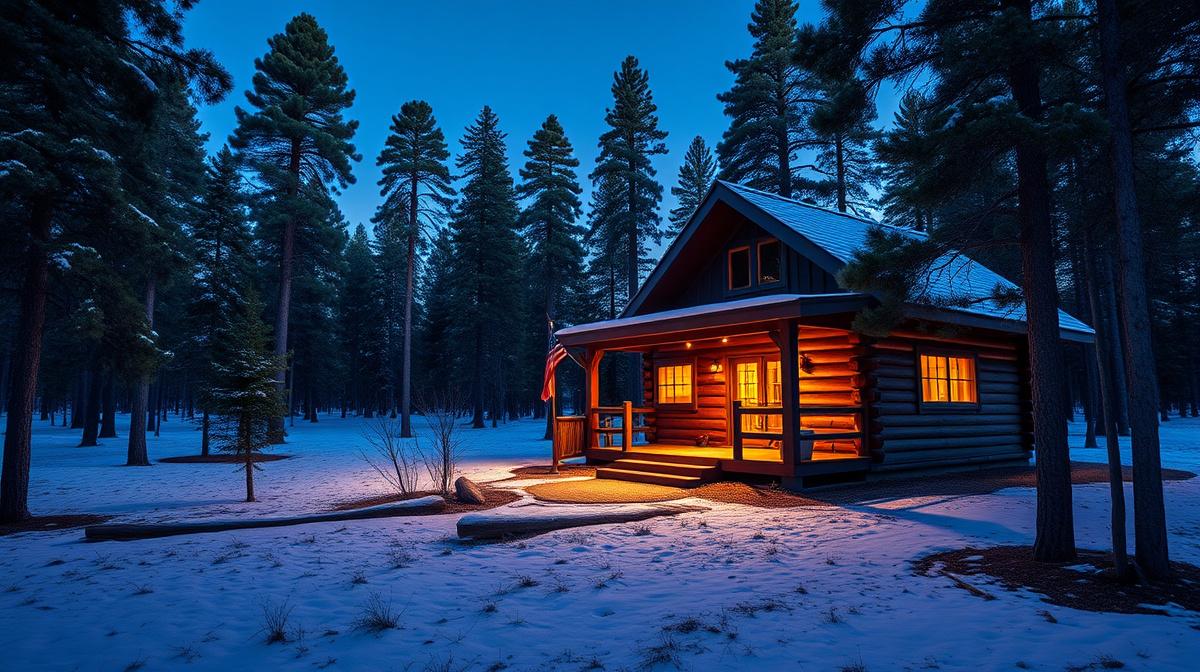
The White Mountains have a real second-home and cabin economy — properties in and around Show Low, Pinetop-Lakeside, and Heber-Overgaard that sit empty for stretches of the winter between visits, weekends, or holiday stays. That pattern changes the risk calculus around insulation in a way most generic insulation advice never addresses. A daily-occupied home has someone around to notice a failing furnace, a draft, or a slowly dropping thermostat before it becomes a burst pipe. A cabin sitting closed up for two or three weeks in January doesn't have that safety net — which is exactly why the building envelope itself has to do more of the work.
Why Unoccupied Properties Face a Different Risk
In a home that's lived in every day, small heat-loss problems get caught early: a cold room gets noticed, a drafty window gets a towel stuffed under it, a thermostat gets bumped up. None of that happens in a cabin that's closed up. If a heating system fails, a breaker trips, or an unusually hard cold snap pushes past what a minimal maintenance-heat setting can handle, an under-insulated, leaky building envelope can lose interior heat fast enough that pipes reach freezing before anyone knows there's a problem.
Show Low sits at roughly 6,400 feet in IECC Climate Zone 5B, with overnight lows regularly dropping well below freezing from November through March. That's the exact climate where the gap between a tightly sealed, well-insulated structure and a leaky one matters most — not because of how cold it gets outdoors, but because of how fast a poorly sealed interior tracks toward that outdoor temperature once the heat source is interrupted.
How Spray Foam Changes the Math for an Unoccupied Building
The core value spray foam adds here isn't just a lower R-value number on paper — it's thermal mass retention. A properly air-sealed, spray-foamed building holds its interior temperature meaningfully longer during a heating interruption than a batt-insulated, air-leaky one, simply because it isn't constantly exchanging warm indoor air for cold outdoor air through gaps and penetrations. That extra time — hours, sometimes longer, depending on the severity of the cold snap and how the property's heating system fails — can be the difference between a caretaker or neighbor catching the problem in time and a burst pipe discovered on the next visit.
- Sealed, spray-foamed attics and roof decks slow the rate at which interior heat escapes upward, the single largest heat-loss pathway in most structures.
- Sealed, spray-foamed crawl spaces and rim areas protect the plumbing runs most likely to freeze first in an unoccupied structure.
- Closed-cell foam's moisture resistance matters more in a property that isn't checked daily for early signs of a leak or condensation issue.
- A tighter envelope overall reduces how hard a minimal maintenance-heat setting has to work to keep interior temperatures above freezing.
Crawl Spaces: The Highest-Value Target for Cabin Freeze Protection
If there's one place to prioritize on a cabin or vacation home with a limited insulation budget, it's the crawl space and the plumbing runs within it. An uninsulated, vented crawl space puts water lines just inches from outside winter air, and in an unoccupied property, a frozen or split pipe there can run for hours or days before anyone finds it — often causing far more water damage than the original freeze event. Closed-cell spray foam applied to the crawl space perimeter and sill plate, targeting a typical R-30-or-better performance level, creates a semi-conditioned space that holds temperature well above what a vented, uninsulated crawl space ever could.
This is worth pairing with basic mechanical precautions — a monitored minimum-heat thermostat setting, pipe insulation on any exposed exterior runs, and a working water-leak sensor tied to a phone alert if the property allows it — but none of those substitute for a properly insulated and air-sealed envelope. Mechanical backups reduce risk; a sealed envelope reduces how fast the underlying problem develops in the first place.
Attics and Roof Decks: Slowing the Biggest Heat-Loss Pathway
Heat rises, and an under-insulated, air-leaky attic is typically the single largest heat-loss pathway in any structure, occupied or not. For a cabin, that means the interior cools toward outdoor temperature faster whenever the heating system isn't actively running — which, on a property visited only occasionally, might be more of the time than not. A properly sealed attic or conditioned roof deck, targeting the typical R-49-60 range appropriate for Zone 5B, slows that heat loss meaningfully, buying more time before interior temperatures drop into a range where pipes and fixtures are at risk.
Log and Timber-Frame Construction: A Note on Assemblies
The White Mountains housing stock includes a meaningful share of log and timber-frame cabins alongside conventional stick-built homes. Log wall assemblies are typically insulated and sealed differently than a standard stud wall — chinking and sealants handle the gaps between logs rather than cavity-fill insulation — but the roof, floor system, and any conventionally framed additions or outbuildings on a log property are exactly where spray foam does its normal job. We assess each property's actual construction type during the on-site visit rather than assuming a one-size-fits-all approach, since a log cabin's insulation plan looks different from a standard-framed vacation home's.
Building a Freeze-Protection Plan for Your Property
Every cabin and vacation home is a little different — some sit closed up for months at a time, others see regular weekend use, some have a caretaker checking in periodically and others don't. A free on-site assessment looks at your specific property's construction, current insulation condition, plumbing layout, and how the property is actually used, then prioritizes the work that reduces your real freeze risk the most for the budget available, rather than a generic whole-house package that may not match how the property sits vacant.
Frequently asked questions
Yes — a properly sealed, spray-foamed building envelope holds interior heat longer during a heating interruption than a leaky, batt-insulated one, which buys time before pipes reach freezing. It's not a substitute for basic mechanical precautions like a monitored minimum-heat setting, but it meaningfully slows how fast a problem develops.
The crawl space and any exposed plumbing runs are usually the highest-priority target, since that's where freeze damage most often originates and goes unnoticed longest in an unoccupied property. The attic is a close second, since it's typically the largest single heat-loss pathway in the structure.
Log wall assemblies are typically sealed differently than standard stud walls, using chinking and sealants between logs rather than cavity-fill insulation. Spray foam still applies normally to a log cabin's roof, floor system, and any conventionally framed additions — we assess the specific construction during the on-site visit.
Yes — cabin and vacation-home insulation work is common in this market, and we tailor the assessment to how the property is actually used, prioritizing the freeze-protection upgrades that matter most for a part-time-occupied structure.
Ready for a free quote?
Tell us about your home and we'll build a clear, no-pressure quote.