Closed-Cell Spray Foam Insulation
Closed-cell spray foam packs the highest R-value per inch of any common insulation material into tight framing cavities, giving Show Low homes a rigid, moisture-resistant air and thermal barrier built for real mountain winters.
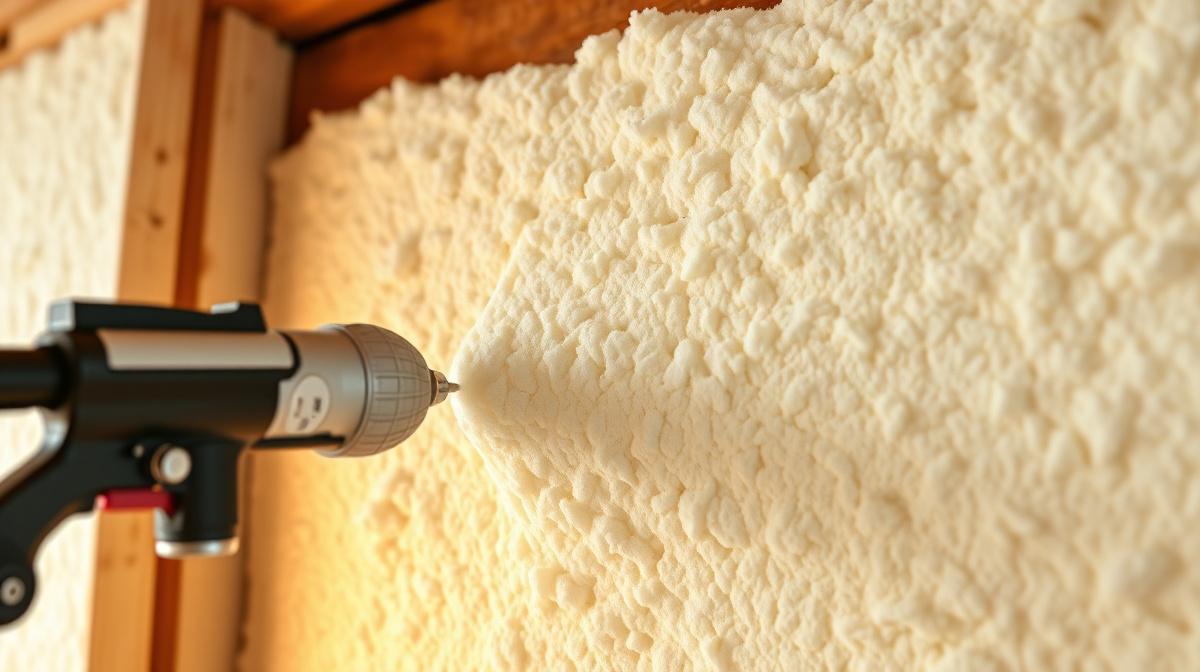
At roughly 6,400 feet in IECC Climate Zone 5B, Show Low homes lose heat through every stud bay and rafter that isn't fully sealed. Closed-cell spray foam is the densest common insulation material, rated at roughly R-6 to R-7 per inch, compared with R-3.5 to R-3.7 for open-cell foam and R-2.9 to R-3.8 for fiberglass batts once real-world air gaps and settling are factored in. That density matters most where a Show Low home doesn't have extra framing depth to spare: a standard 2x4 or 2x6 wall cavity, or a shallow crawl space perimeter wall.
Beyond raw R-value, closed-cell foam cures into a rigid, monolithic layer that bonds directly to framing, sheathing, and subfloor, adding real structural stiffening against the racking stresses that wind and roof snow loads put on a building envelope. Closed-cell foam is also effectively impermeable to water vapor once cured, which makes it the right choice anywhere ground moisture or occasional snowmelt can work its way into an assembly. For Show Low and White Mountains properties, closed-cell foam is less a premium upgrade than the correct material for the parts of a building that take on the most cold, moisture, and structural stress each winter.
Why homeowners choose it
- Delivers the highest R-value per inch of any common insulation material, roughly R-6 to R-7, so Zone 5B wall and floor targets are achievable in standard framing depths.
- Cures into a rigid structural layer that adds stiffness to walls and roof decks under wind and snow-load stress.
- Acts as a genuine moisture barrier once cured, blocking snowmelt, wind-driven moisture, and ground dampness from migrating into wall cavities.
- Air-seals and insulates in a single application, closing the small gaps and penetrations that fiberglass and cellulose leave open to cold infiltration.
- Adds no measurable water absorption over time, so its insulating performance doesn't degrade the way batts and blown-in materials can after moisture exposure.
- Reduces heating-system reliance during a long White Mountains winter by cutting conductive and convective heat loss at a home's most vulnerable framing points.
Why Density Wins in a Zone 5B Assembly
Hitting solid cold-climate R-value targets inside a standard 2x4 or 2x6 wall cavity depends entirely on how much R-value the material delivers per inch of available space. Closed-cell spray foam's R-6 to R-7 per inch means a 2x6 cavity filled with closed-cell foam can meet or exceed typical Zone 5B targets outright, where fiberglass or cellulose at R-2.9 to R-3.8 per inch would need far more depth than the framing provides.
This is why closed-cell foam is the default choice for tight cavities and transition points where Show Low homes historically lose the most heat — it closes both the thermal and air-sealing performance gap in the same application, rather than requiring a second air-sealing pass.
- R-6 to R-7 per inch versus R-3.5 to R-3.7 for open-cell foam
- Meets typical Zone 5B wall targets inside standard framing depths
- Well suited to shallow cavities and framing transitions
- Supports a tighter whole-house air-leakage result
Structural Rigidity Against Wind and Snow-Load Stress
Closed-cell spray foam cures rigid and adheres directly to framing members, sheathing, and roof decking, effectively adding a bonded structural layer across the surfaces it's applied to. On roof decks in particular, that rigidity helps resist the flexing and racking loads that wind and periodic snow accumulation place on a structure over time, even in a moderate-snowfall market like Show Low's roughly 19 inches a year.
This structural contribution is a byproduct of the material's chemistry, not a separate product, so it comes at no added cost beyond the application itself. For older White Mountains-area homes with roof decks or wall assemblies that have taken decades of weather stress, a closed-cell application can meaningfully stiffen those assemblies while solving the insulation problem in the same pass.
A Real Moisture Barrier for Freeze-Thaw Assemblies
Ground moisture and occasional snowmelt are persistent challenges for a Show Low building envelope, working their way into crawl spaces and foundation walls during freeze-thaw cycles common at this elevation. Closed-cell spray foam's cell structure is effectively closed off once cured, giving it very low water absorption compared to open-cell foam, fiberglass, or cellulose, all of which can hold moisture and lose R-value if they get wet.
That makes closed-cell the right call anywhere ground moisture or wind-driven moisture is a realistic risk: crawl spaces, foundation walls, and unheated garages built on grade. It also protects the investment itself, since the material doesn't absorb water and settle the way fiberglass batts or blown cellulose can over years of White Mountains winters.
- Near-zero water absorption once fully cured
- Protects crawl spaces and foundations from moisture intrusion
- R-value doesn't degrade from moisture exposure the way batts or cellulose can
- Reduces risk of moisture-related wood rot in framing over time
Ideal for
- Homes and additions with standard 2x4 exterior walls where hitting higher R-value targets requires the most R-value per inch available
- Crawl spaces and foundation walls exposed to ground moisture and freeze-thaw cycling
- New construction projects built to meet or exceed IECC Zone 5B cold-climate insulation targets from the framing stage forward
- Cabins and second homes left unheated or set to minimal heat for stretches, where a moisture-resistant, air-tight envelope matters most
- Any assembly exposed to wind-driven moisture or ground dampness at Show Low's elevation
What affects the cost
Closed-Cell Foam questions, answered
Closed-cell foam delivers roughly double the R-value per inch of open-cell foam, which matters most where framing depth is limited, such as 2x4 walls. It also adds structural rigidity and blocks moisture, making it the better choice anywhere ground moisture or freeze-thaw exposure is a factor.
Not necessarily. Many Show Low homes use closed-cell foam in crawl spaces and exterior walls where density and moisture resistance matter most, while open-cell foam handles interior walls and conditioned attic spaces. A free on-site assessment determines the right mix.
Closed-cell foam's R-6 to R-7 per inch makes it one of the most efficient ways to hit typical Zone 5B wall and attic R-value guidance within standard framing depths, without needing extra framing thickness.
Closed-cell installations generally fall toward the higher end of the typical $1.50 to $5.00 per square foot installed range for spray foam, reflecting its greater density and R-value. Actual pricing depends on square footage, cavity depth, and site conditions.
Closed-Cell Foam done right, by a local Show Low crew
Closed-Cell Foam isn't a commodity — the result depends entirely on how carefully it's planned and installed for your specific property and Show Low's real high-country climate. We assess what your house actually needs, prep and air-seal properly, and install to your elevation-appropriate R-value target, so the work delivers the comfort and savings it's supposed to.
We serve Show Low, Pinetop-Lakeside, Taylor, Snowflake, and Heber-Overgaard. Every job starts with a free, no-pressure quote.
Just as important, we treat your property like the system it is. Insulation, air sealing, and how the space is used all interact, and getting one right while ignoring the others leaves comfort and savings on the table. When we scope your closed-cell foam, we look at how it fits the whole picture — so the finished result performs the way it should, holds up through a genuine Show Low winter, and actually lowers the bills you feel every month.
Free assessment
We evaluate your home and give you a clear, itemized quote.
Expert install
We prep, air seal, and install your closed-cell foam to spec — clean and on schedule.
Savings you can feel
A warmer home, lower heating bills, and honest advice about what your home needs.
Related services
Ready for a free closed-cell foam quote?
Tell us about your home and we'll put together a clear, no-pressure spray foam insulation quote — built for Show Low's real White Mountains winters.