Attic Spray Foam Insulation
A properly sealed, insulated attic is the single biggest lever a Show Low home has for cutting winter heat loss and keeping heating bills under control at 6,400 feet.
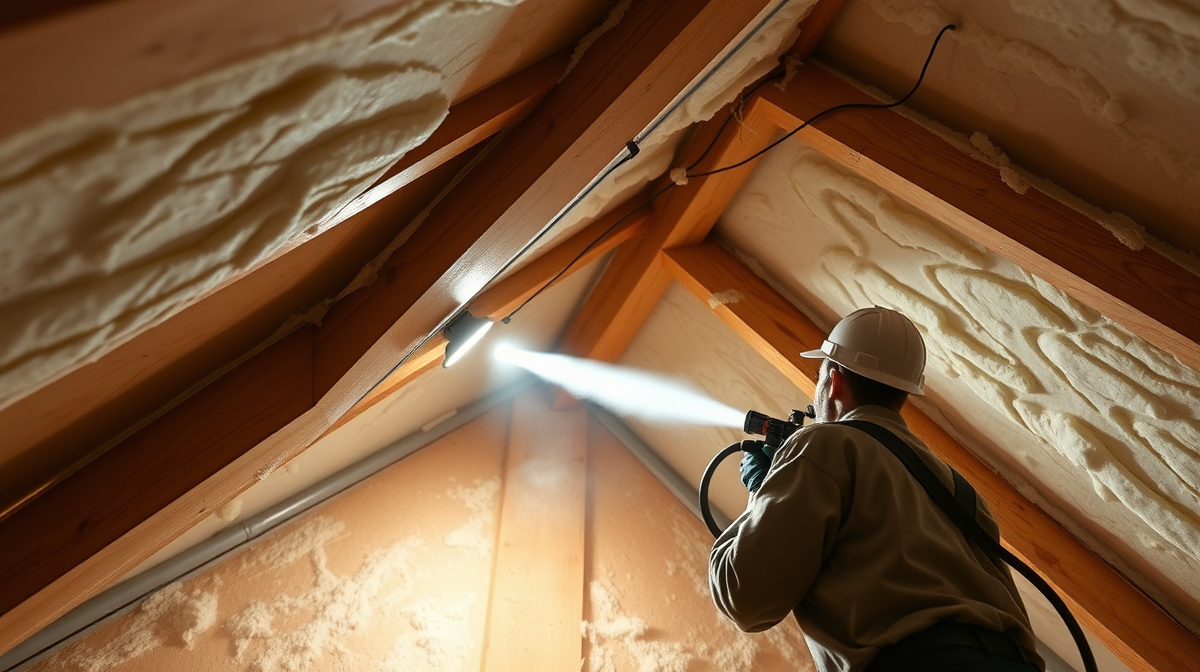
At roughly 6,400 feet on the Mogollon Rim, Show Low sits solidly inside IECC Climate Zone 5B — a genuine cold-winter climate where nighttime lows regularly drop below freezing from November through March. In an under-insulated, poorly air-sealed attic, warm household air rises through can lights, attic hatches, top plates, and plumbing chases, and escapes straight into the attic space above. That's heat you paid to generate, gone before it ever warmed a room for long. Fiberglass batts and blown cellulose slow that heat transfer somewhat, but neither one stops the air movement that's actually driving most of the loss, and both lose real-world performance over time as they compress, settle, or get disturbed by attic storage and utility access.
Spray foam solves this differently because it insulates and air-seals the attic in a single application, closing off the gaps and penetrations that let conditioned house air escape in the first place. For most Show Low homes, that means applying closed-cell or a closed-cell/open-cell combination either to the underside of the roof deck — converting the attic into a conditioned, unvented space — or to the attic floor and ceiling plane if the roof structure and ventilation setup favor keeping a vented attic. Either approach targets the R-49 to R-60 range that's the typical industry guidance for IECC Zone 5B attics, and both stop the steady bleed of expensive winter heat that drives up electric or propane heating costs through a White Mountains winter.
Why homeowners choose it
- Seals the air leaks that let warm house air escape into the attic, addressing the root cause of winter heat loss instead of just adding material on top of the problem.
- Targets the R-49 to R-60 range that's typical industry guidance for an IECC Zone 5B attic like Show Low's.
- Reduces the runtime and cost of whatever heating system the home uses — electric, propane, or wood — through a long White Mountains heating season.
- Keeps ductwork and mechanical equipment inside the conditioned envelope instead of exposed to near-freezing attic temperatures overnight.
- Won't settle, sag, or lose R-value over time the way blown cellulose and fiberglass batts commonly do after years of attic temperature swings.
- Helps protect cabins and second homes that sit unoccupied for stretches by reducing how fast the interior loses heat during a cold snap.
Why Attic Air-Sealing Matters More at 6,400 Feet
Elevation changes the math on heat loss. At Show Low's roughly 6,400 feet, outdoor air is thinner and nighttime radiative cooling is more pronounced than at lower elevations, which is part of why winter lows here regularly sit well below freezing even when daytime highs look mild. An attic with real air leakage doesn't just lose heat through the insulation material — it actively exchanges warm indoor air for cold outdoor air through every unsealed penetration, and that exchange accelerates whenever there's a temperature and pressure differential between the house and the attic, which is most of a White Mountains winter night.
That's the distinction we walk every homeowner through before recommending an approach: adding depth to existing insulation without air-sealing first is treating the symptom, not the cause. Spray foam's air-sealing property is what actually stops the exchange, and it's why a spray-foamed attic at a given R-value consistently outperforms a batt or blown-in attic rated at the same number on paper.
- Conditioned (unvented) roof-deck attics bring ductwork and mechanicals inside the thermal envelope
- Attic-floor sealing is the right call for attics that stay vented for structural or ventilation reasons
- Closed-cell foam anchors the air barrier at penetrations, hatches, and top plates
- Open-cell foam is often layered in for cost-effective depth once the air barrier is established
- Every attic gets an on-site assessment before we recommend a roof-deck or floor-plane approach
Targeting Zone 5B's R-49–60 Range Without Guesswork
The typical industry guidance for an IECC Zone 5B attic — the climate zone Show Low falls into — runs from R-49 up to R-60 depending on the specific assembly and how conservative the target. Closed-cell spray foam delivers roughly R-6 to R-7 per inch, so a roof-deck application can reach that range in a fraction of the depth that loose-fill fiberglass or cellulose would need, while air-sealing the assembly in the same pass. On many Show Low projects we combine a closed-cell base layer for air-sealing and structural adhesion with open-cell foam filling out the remaining depth for cost-effective R-value, sized to the specific roof framing.
For attics that stay vented rather than converting to a conditioned assembly, we apply foam at the attic floor and ceiling plane instead — sealing every penetration, top plate, and hatch before building up to the target R-value. Which approach makes sense depends on your roof framing, existing ventilation, and whether ductwork lives in the attic, which is exactly what the on-site assessment sorts out before any quote is written.
What to Expect From an Attic Project
Most attic projects start with a walkthrough of the existing insulation, roof framing, ventilation setup, and any specific complaints — a consistently cold room below, high winter bills, or ductwork that seems to be fighting a losing battle. From there we scope whether a full roof-deck conversion makes sense or whether a ceiling-plane air-seal-and-insulate approach is the better fit, and give a firm quote based on square footage and target R-value.
Installation is typically a half-day to full-day job for an average Show Low attic, depending on size and whether existing insulation needs removal first. We protect the work area, seal off penetrations and can lights, and apply foam in controlled lifts to the specified thickness, then do a final walkthrough to confirm coverage before wrapping up. Because spray foam cures in place and doesn't settle, the R-value and air-seal you get on install day is the one you still have years later.
Ideal for
- Homeowners who notice persistently cold ceilings or upstairs rooms that never quite warm up in winter
- Older Show Low-area homes with original, thin, or unevenly distributed fiberglass or cellulose attic insulation
- Homes with ductwork or an HVAC air handler located in the attic, where heat loss and freeze risk compound each other
- Cabin and vacation-home owners who want a home that holds heat efficiently between visits rather than cold-soaking completely
- Anyone remodeling a roof or re-decking who wants to correct attic performance while the space is already open
What affects the cost
Attic Insulation questions, answered
Show Low falls within IECC Climate Zone 5B, where typical industry guidance calls for attic insulation in the R-49 to R-60 range. We size the foam thickness and assembly to that target based on your specific roof and attic setup during the on-site assessment.
It depends on your roof framing, ductwork location, and existing ventilation. Converting to a conditioned, unvented attic with roof-deck foam is often the strongest heat-loss fix, but a properly air-sealed ceiling-plane approach is the right call for some homes. We evaluate both during your assessment.
For homes with an under-insulated or leaky attic, yes — often meaningfully, since spray foam stops both the conductive heat loss and the air leakage that drive most winter heat loss in a Zone 5B home. Exact savings depend on your current insulation and heating system, which a free assessment can help estimate.
Most single attics complete in a half-day to a full day, depending on size and whether old insulation needs removal first. We'll give you a specific timeline during your on-site assessment.
Attic projects here typically run in the $2,000 to $6,500 typical range depending on square footage, target R-value, and whether existing insulation needs removal first. We give a firm number after an on-site assessment rather than a rough guess over the phone.
Attic Insulation done right, by a local Show Low crew
Attic Insulation isn't a commodity — the result depends entirely on how carefully it's planned and installed for your specific property and Show Low's real high-country climate. We assess what your house actually needs, prep and air-seal properly, and install to your elevation-appropriate R-value target, so the work delivers the comfort and savings it's supposed to.
We serve Show Low, Pinetop-Lakeside, Taylor, Snowflake, and Heber-Overgaard. Every job starts with a free, no-pressure quote.
Just as important, we treat your property like the system it is. Insulation, air sealing, and how the space is used all interact, and getting one right while ignoring the others leaves comfort and savings on the table. When we scope your attic insulation, we look at how it fits the whole picture — so the finished result performs the way it should, holds up through a genuine Show Low winter, and actually lowers the bills you feel every month.
Free assessment
We evaluate your home and give you a clear, itemized quote.
Expert install
We prep, air seal, and install your attic insulation to spec — clean and on schedule.
Savings you can feel
A warmer home, lower heating bills, and honest advice about what your home needs.
Related services
Ready for a free attic insulation quote?
Tell us about your home and we'll put together a clear, no-pressure spray foam insulation quote — built for Show Low's real White Mountains winters.