Crawl Space Spray Foam Insulation
Vented, unconditioned crawl spaces are where Show Low homes are most likely to lose pipes and subfloor comfort to a hard freeze — spray foam insulates and air-seals the perimeter in one pass to keep plumbing and living space above the frost line.
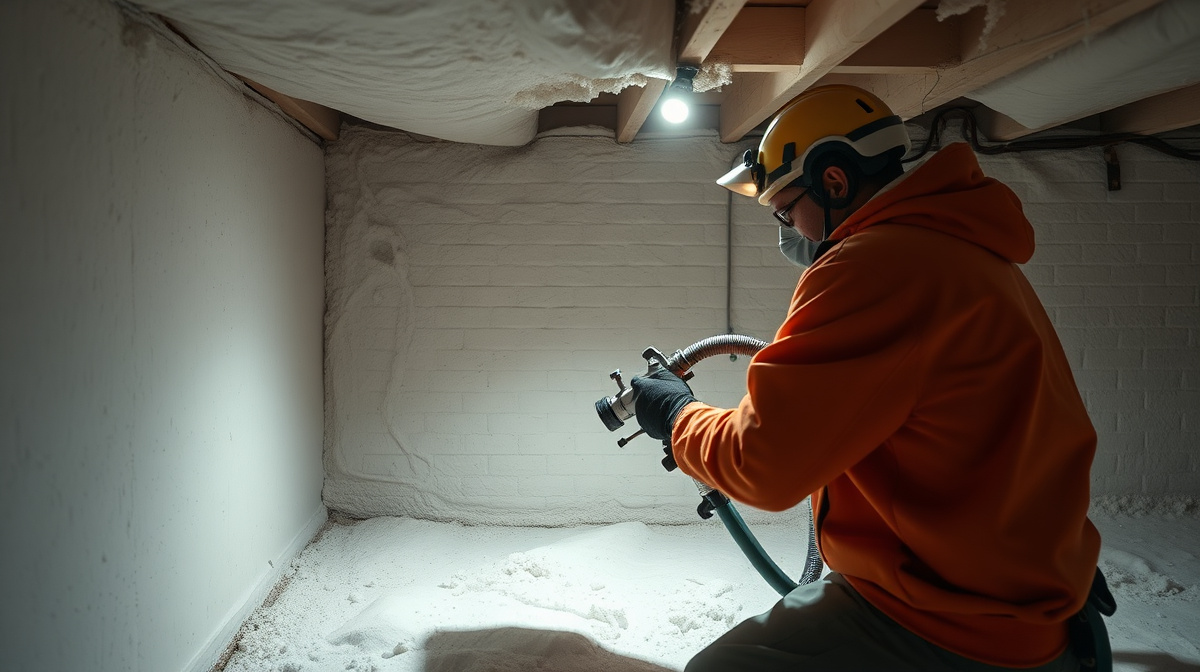
At roughly 6,400 feet in IECC Climate Zone 5B, Show Low sees sustained stretches of sub-freezing overnight temperatures most winters — the kind of cold most desert-Arizona insulation guidance never has to plan for. A vented, unconditioned crawl space built to a generic statewide standard puts water lines, drain traps, and the subfloor itself just inches from outside winter air. Show Low's sloped, often rocky terrain also means crawl space and stem-wall foundations are common in this market alongside slab construction, so a meaningful share of local homes have exactly this exposure. When cold air pools under the house for days at a time, fiberglass batts sagging between joists do little to stop it, and homeowners end up with frozen or burst pipes, ice-cold flooring in the rooms above, and mechanicals working overtime just to keep up.
Spray foam insulation solves the problem the way fiberglass batts and loose vapor barriers can't: it insulates and air-seals the crawl space perimeter and sill plate in a single continuous application, closing the gaps where cold air and ground moisture actually get in. Closed-cell foam is the standard choice here, reaching a typical crawl space target of R-30 or higher while adding a genuine moisture barrier against ground dampness. The result is a crawl space that holds temperature through a hard freeze, protects the plumbing routed through it, and takes pressure off the heating system above.
Why homeowners choose it
- Spray foam air-seals and insulates the crawl space perimeter in one application, closing the gaps where cold air and ground moisture bypass fiberglass batts.
- Closed-cell foam reaches a typical R-30-or-higher target in a space-constrained crawl space without the excessive thickness fiberglass would require.
- An insulated, air-sealed crawl space keeps water supply lines, drain lines, and shutoff valves above freezing during sustained cold stretches.
- Sealing the crawl space perimeter stops cold air from migrating up through subfloor penetrations, reducing cold-floor complaints in rooms above.
- Closed-cell foam's rigid, moisture-resistant structure holds up against ground dampness, unlike fiberglass, which absorbs water and sags out of place.
- Cutting crawl space heat loss reduces the load on ducts, water heaters, or other mechanicals often routed through that space.
Why Show Low Crawl Spaces Freeze
Show Low's elevation puts the ground itself in play during winter, not just the air above it. Sustained sub-freezing overnight stretches are routine here, and a vented crawl space built to a generic Arizona minimum is designed around lower-elevation desert conditions, not a genuine cold, high-elevation mountain climate. Cold air settles and pools under the house, and without continuous insulation and air-sealing at the perimeter, that cold has a direct path to water lines, the subfloor, and any ductwork routed underneath.
The symptoms show up fast: pipes that freeze or split during a hard cold snap, floors in the rooms above that stay cold no matter how hard the heating system runs, and — for cabin and second-home owners in particular — the risk of a burst pipe going undiscovered for days between visits. Fiberglass batts stapled between joists rely on a perfect, gap-free install to perform at all, and in practice they settle, sag, and leave seams that cold air finds immediately.
- Frozen or burst water lines during sustained cold snaps
- Persistently cold floors in rooms directly above the crawl space
- Visible frost or condensation on subfloor framing and ductwork
- Elevated freeze risk for cabins and second homes left unoccupied for stretches
Reaching R-30+ with Closed-Cell Spray Foam
Crawl spaces are the one part of a Show Low home where moisture exposure is close to a given, which is why closed-cell spray foam is the standard choice for this application. At roughly R-6 to R-7 per inch, closed-cell foam reaches a typical crawl space target of R-30 or higher without eating up the limited clearance most crawl spaces offer, and its rigid, closed-cell structure resists ground dampness rather than absorbing it the way fiberglass does.
The application covers the crawl space perimeter walls and, just as importantly, the sill plate band where the framing meets the foundation — a transition point that's routinely under-insulated and a major source of cold-air infiltration into the living space above. Existing ground vapor barriers are checked and addressed as part of the same project, since a torn or missing barrier undermines the moisture performance of everything installed above it.
What the Crawl Space Process Looks Like
Every project starts with an on-site assessment of the crawl space: current insulation condition, moisture and vapor barrier status, clearance, and whether ducts, plumbing, or a water heater are routed through the space. Failed, wet, or pest-damaged fiberglass and any deteriorated vapor barrier are removed before foam goes in, since spray foam needs to bond to clean framing to perform correctly.
From there, closed-cell foam is applied to the perimeter walls and sill plate to the target thickness, with attention paid to sealing around plumbing penetrations and framing seams. Ventilation strategy is discussed on a home-by-home basis, since converting a vented crawl space to a sealed, semi-conditioned one changes how it needs to be managed going forward. Most crawl space projects are completed in a single day depending on size and access.
Ideal for
- Show Low-area homes with vented, unconditioned crawl spaces and a history of frozen or burst pipes
- Properties showing frost, cold drafts, or condensation on subfloor framing during winter months
- Homes with ductwork, a water heater, or plumbing runs located inside the crawl space
- Cabins and second homes left unoccupied for stretches, where pipe freeze risk is highest without anyone on-site to catch an early warning sign
- New or existing homes working toward stronger cold-climate foundation insulation performance
What affects the cost
Crawl Space Insulation questions, answered
Yes — an unconditioned, vented crawl space is one of the most common places pipes freeze in Show Low homes during sustained cold snaps. Spray foam insulates and air-seals the perimeter so the space holds temperature well above where fiberglass batts alone can manage.
Closed-cell spray foam's rigid structure acts as a moisture barrier rather than absorbing water the way fiberglass does, which matters in a crawl space exposed to ground dampness. A sound ground vapor barrier underneath the foam completes the moisture control picture.
We target R-30 or higher in crawl space applications, consistent with typical cold-climate guidance for IECC Zone 5B. Closed-cell foam reaches that target without requiring excessive thickness.
It's genuinely a mix — the area's sloped, often rocky terrain means crawl space and stem-wall foundations are common alongside slab-on-grade construction, especially on hillside lots. We assess your specific foundation type during the free on-site visit.
Crawl Space Insulation done right, by a local Show Low crew
Crawl Space Insulation isn't a commodity — the result depends entirely on how carefully it's planned and installed for your specific property and Show Low's real high-country climate. We assess what your house actually needs, prep and air-seal properly, and install to your elevation-appropriate R-value target, so the work delivers the comfort and savings it's supposed to.
We serve Show Low, Pinetop-Lakeside, Taylor, Snowflake, and Heber-Overgaard. Every job starts with a free, no-pressure quote.
Just as important, we treat your property like the system it is. Insulation, air sealing, and how the space is used all interact, and getting one right while ignoring the others leaves comfort and savings on the table. When we scope your crawl space insulation, we look at how it fits the whole picture — so the finished result performs the way it should, holds up through a genuine Show Low winter, and actually lowers the bills you feel every month.
Free assessment
We evaluate your home and give you a clear, itemized quote.
Expert install
We prep, air seal, and install your crawl space insulation to spec — clean and on schedule.
Savings you can feel
A warmer home, lower heating bills, and honest advice about what your home needs.
Related services
Ready for a free crawl space insulation quote?
Tell us about your home and we'll put together a clear, no-pressure spray foam insulation quote — built for Show Low's real White Mountains winters.